Published 25 September 2026. This is an independent roundup based on Meta’s announcements, not a hands-on review.
Meta Connect 2026 has wrapped up, and this year’s event delivered considerably more than another Quest software update. Meta unveiled a new kind of VR device, expanded its smart-glasses range, brought its display glasses to the UK and showed how controller-free gaming could work.
The headline is Meta VR Glasses: a roughly 100-gram mixed-reality device that moves the processor, battery and storage into a separate pocket-sized puck. Here are the announcements that matter and the trade-offs worth knowing.
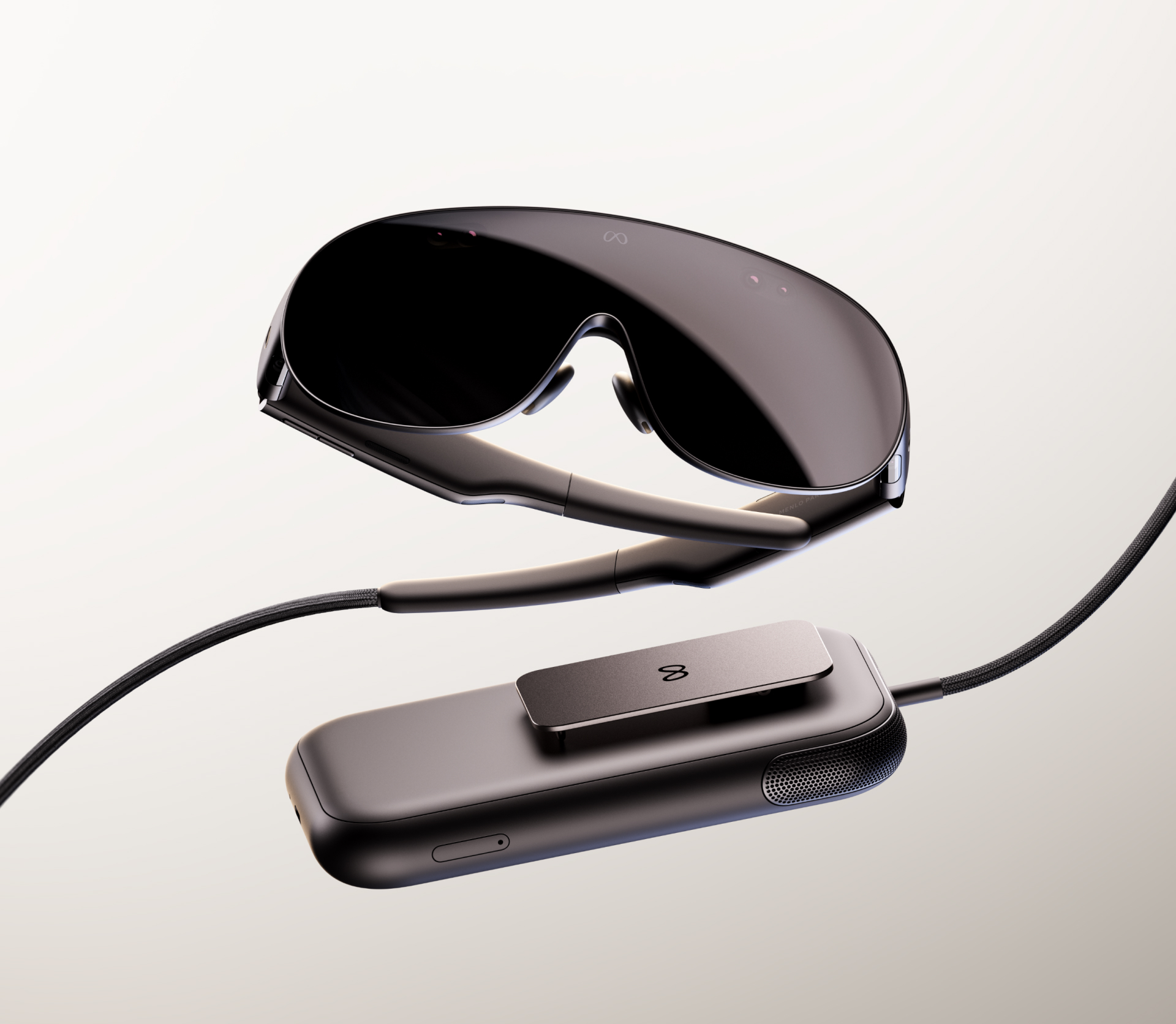
Meta VR Glasses: a much lighter approach to VR
Meta VR Glasses weigh about 100g, around one-fifth of a Quest 3. The glasses contain the displays and sensors, while an optical cable connects them to a puck that handles computing, battery and storage. Meta says the 5K Infinite Display uses micro-OLED panels and delivers 37 pixels per degree. The new Snapdragon Reality Elite processor powers the device, and the puck is rated for up to three hours of high-resolution media playback with 45W fast charging.
Eyes and hands are the main controls: look at something and select it with a gesture. Touch Plus controllers will be supported separately for games that need them. Meta says VR Glasses use the same operating system, Horizon Store and SDK family as Quest, so developers can bring existing apps across. Its developer guidance gives the glasses a roughly 70° × 66° field of view, narrower than Quest 3’s approximately 110° × 96°. That smaller viewing area is a real compromise behind the lighter design.
Meta plans to sell VR Glasses in spring 2027 from $1,299.99 in the US. A UK launch price has not been confirmed in its announcement. This is a premium addition to Quest, rather than an announced Quest replacement. See Meta’s VR Glasses announcement and developer details.
A personal cinema, sports seat and workspace
Meta is pitching the device for more than gaming. It calls VR Glasses the first IMAX Enhanced-certified VR device and is working with Disney+, Prime Video, YouTube, HBO Max, Paramount+, Plex and other services on immersive and 3D viewing. Availability of individual films and services will vary by country and subscription.
For sport, Meta promises 8K, 180-degree immersive coverage and more than 100 live events a year after launch with partners including ESPN, MLB, NBC Sports, TNT Sports and UFC. These are Meta’s plans, not a guarantee that every event will be available in the UK.
You can also place one or several virtual screens around you while full-colour passthrough keeps your real surroundings visible. Meta’s Surface Input turns a flat desk into a virtual keyboard and touchpad. Whether tapping a table beats a real keyboard for a full working day remains to be seen, but the travel use case is clear.
Hand-tracked gaming and Beat Saber Flux
Meta says more than 75 games will be playable using hand gestures alone when VR Glasses launch. Controller games can still be played with compatible Touch Plus controllers. A spring 2027 update to Beat Saber will introduce Flux, a new mode based on hand tracking, for Meta VR Glasses and Quest. It is an intriguing experiment for a game built around swinging controllers.
Meta has released its v207 SDKs and simulators ahead of the hardware so developers can test gaze and hand input now. For existing headset buyers, the continued Quest compatibility matters more than any unconfirmed Quest 4 rumour. Read our Quest 3 review, Quest 3S review and Steam Frame guide for headsets you can consider today.
Ray-Ban Meta Gen 3 and camera-free Audio glasses
Ray-Ban Meta (Gen 3) brings slimmer frames, a customisable action button, up to nine hours of battery life, a six-microphone array and a 12MP camera capable of 3K video. Meta says prices start at $449 in the US, with availability beginning at Connect.
The new Ray-Ban Meta Audio removes the camera and focuses on open-ear listening, calls and AI. Meta lists a weight of 43g, up to 12 hours of battery life and up to another 48 hours from the case. US pre-orders start at $349, with shipping from 13 October 2026. For anyone uneasy about a camera on their face, that distinction may be the best feature. Read Meta’s glasses announcement.
Meta Ray-Ban Display arrives in the UK
Meta Ray-Ban Display went on sale in the UK on 23 September. Meta also announced cycling and public-transport directions, more natural walking guidance, mirrored notifications and an Explore app for glasses experiences. Features will roll out at different times and in different markets: for example, the initial cycling and transit directions are scheduled for the US and Canada later this month.
A new Hologram feature uses a short self-capture to create a photorealistic digital version of the wearer for hands-free calls. Early Access on WhatsApp is planned for US Display users later this autumn. It is not a feature UK purchasers should assume is available today. See Meta’s Display update.
Muse AI and tools for creators
Meta says its Muse personal AI agent will come to AI glasses in the coming months, with hands-free help for tasks such as shopping, planning and navigating. It also showed AI-assisted tools for building Horizon experiences and gave developers early access to VR Glasses software. The ambition is clear: connect smart glasses, display glasses and VR through one broader platform, while the practical value will depend on how well those features work when they ship.
What about Quest 4?
There was no Quest 4 announcement at Connect 2026. Meta has said it continues to invest in new gaming hardware, but it has not confirmed a Quest 4 name, specification, price or release date. Treat supposed launch dates as rumour until Meta provides details.
Our verdict
Meta VR Glasses are the most interesting VR reveal of Connect: much less weight on your face, sharper micro-OLED displays and a broad mix of cinema, sport, work and games. The narrower field of view, separate tethered puck and $1,299.99 US starting price are important caveats. Until independent reviews and UK pricing arrive, this is one to watch rather than an automatic recommendation to buy.
For a headset available now, the current best VR headset guide remains a better place to choose. The future looks lighter, but your wallet may still feel the weight.