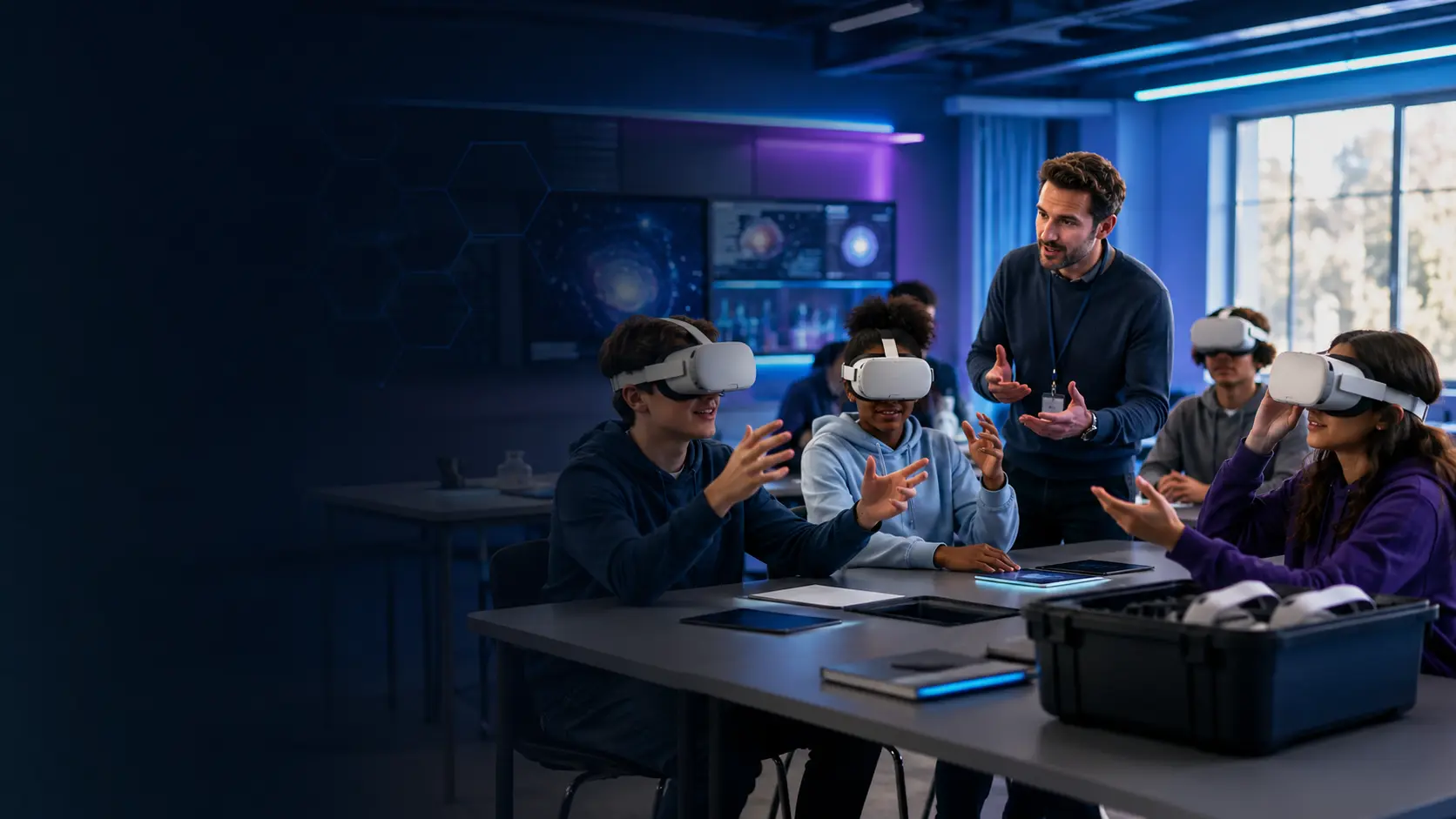
Independent guidance to help schools, colleges and training providers choose, manage and use virtual reality effectively.
Virtual reality can take learners inside the human body, onto a construction site, through a historical location or into a safe skills simulation. The technology is exciting, but a successful classroom project needs more than a box of headsets. It requires clear learning goals, suitable content, reliable management and a realistic plan for supervision, hygiene and support.
What education buyers need to consider
| Area | Questions to ask |
|---|---|
| Learning purpose | What will pupils or trainees learn that is difficult to achieve another way? |
| Equipment | How many headsets are needed, and can they operate without individual personal accounts? |
| Content | Is the application appropriate, accessible and licensed for institutional use? |
| Management | Can staff install apps, apply settings and monitor multiple devices centrally? |
| Practical operation | Who handles charging, cleaning, storage, updates and technical support? |
| Safety and privacy | How are physical space, pupil information and safeguarding requirements managed? |
From a trial to a dependable classroom system
A small supervised trial is usually more useful than purchasing a large fleet immediately. It allows teachers to test the lesson, understand setup time and discover whether the intended application genuinely improves learning. Our guides will help organisations compare equipment and calculate the complete cost, including licences, storage, cleaning supplies, warranties and staff time.
Subjects and training uses
- Science, anatomy and healthcare
- History, geography and virtual field trips
- Engineering, construction and vocational skills
- Languages, communication and presentation practice
- Art, design and three-dimensional creativity
- Safety and scenario-based training
Start here: our practical guide for UK schools
Planning a school or college VR project? Our new in-depth guide covers equipment, three-year costs, safeguarding, data protection, accessibility, classroom management and a sensible six-headset pilot.
More VR education guides coming soon
- What a ten-headset classroom really costs
- Best educational VR applications by subject
- Managing shared headsets, accounts and applications
- Cleaning, charging and safely storing classroom headsets
- Planning and measuring a VR teaching trial
Useful evidence, not novelty for novelty’s sake
We will examine what each product does, who it suits, what it costs and what work is required to run it. Where evidence is limited, we will say so clearly. Schools need dependable information and sensible purchasing decisions—not a cupboard full of futuristic paperweights.