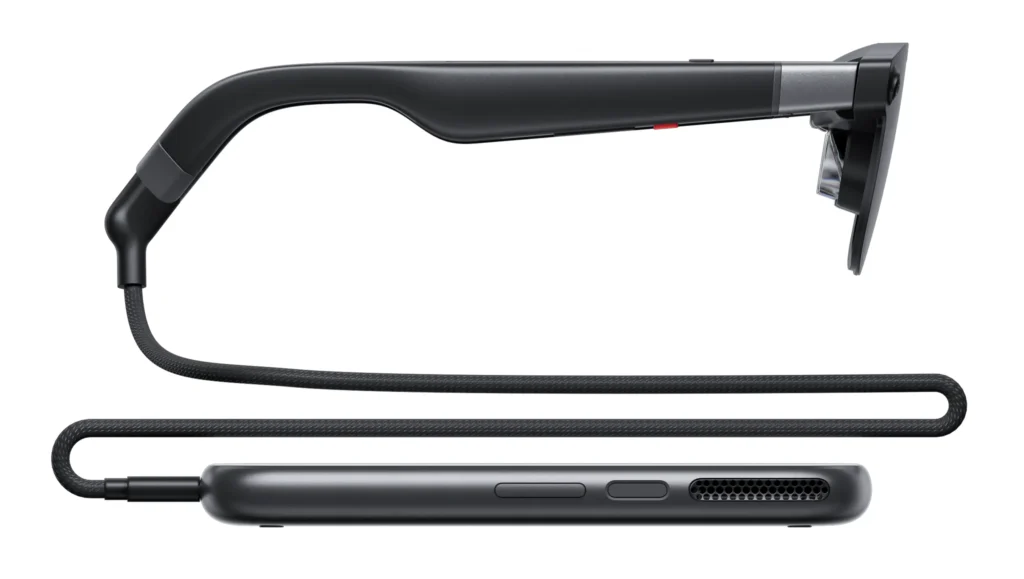
Updated 8 October 2026. XREAL has confirmed the price of its Aura Android XR glasses and opened purchase access to customers who placed a paid reservation before 7 October. The glasses start at $1,279 in the US, with a higher-spec version at $1,499. This is an early, limited launch; there is still no confirmed UK price or shipping date.
What has XREAL announced?
The 12GB RAM and 256GB storage version costs $1,279, while the 16GB/512GB model costs $1,499. Existing paid reservation holders can complete their orders now. People without an earlier reservation can still place a priority deposit, but general orders are expected to open in the coming weeks. XREAL says shipping will begin in the US, Canada, Japan and South Korea, with more markets following in 2027. It has not named the UK among those first four markets.
That distinction matters if you are shopping from Britain: the dollar price is not a UK price, and importing one could add shipping costs, taxes and support complications. We would wait for XREAL to confirm local availability before treating Aura as a UK buying option.
How do Aura glasses work?
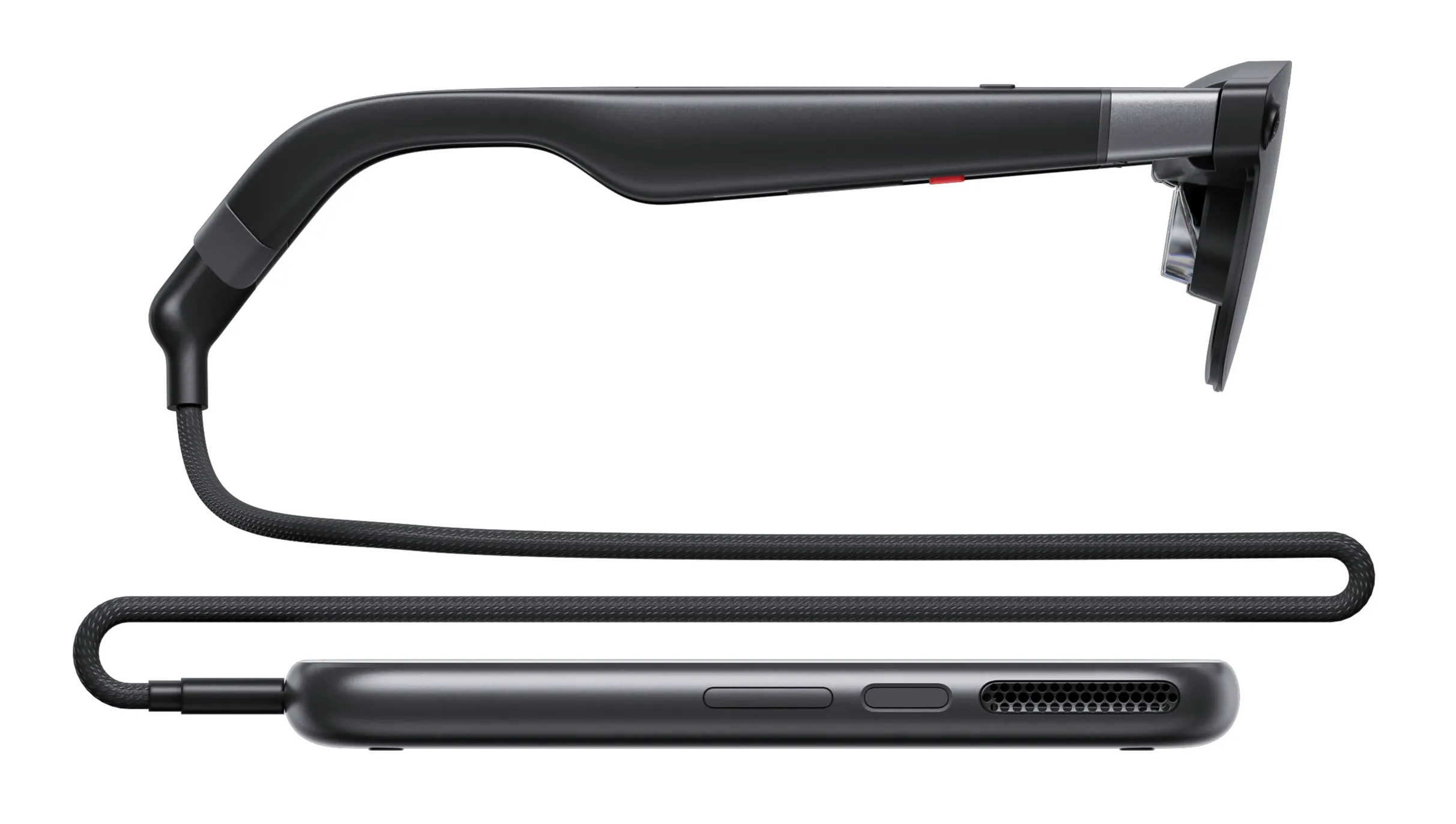
Aura is an optical see-through headset: you look through transparent lenses at the real world while virtual windows and objects appear in your view. XREAL quotes a 70-degree field of view and a glasses weight under 95g. A cable connects the eyewear to a pocketable computing puck containing Qualcomm’s Snapdragon Reality Elite processor, battery and storage. The glasses also have XREAL’s X1S spatial coprocessor.
Android XR supplies the software platform, with Google Play apps and Gemini assistance. XREAL lists hand tracking, voice input and a touchpad on the puck. Its published specifications name Sony micro-OLED displays at 1,920 × 1,200 pixels per eye, up to 120Hz, plus electrochromic dimming. Those are manufacturer specifications; comfort, image clarity and battery life still need independent testing in normal use.
XREAL Aura vs Meta VR Glasses: the key differences
| Feature | XREAL Aura | Meta VR Glasses |
|---|---|---|
| US starting price | $1,279 | $1,299.99 |
| View of the real world | Direct view through optical see-through lenses | Full-colour camera passthrough |
| Computing | Wired Android XR puck | Tethered Horizon OS puck |
| Software emphasis | Android apps, spatial work and entertainment | Meta media, work and gesture-controlled games |
| Availability announced | First shipping markets in 2026; wider rollout in 2027 | Spring 2027 sale announced |
Both move much of the weight off your face and into a connected puck. The more important choice is the experience: XREAL lets you see your surroundings directly, whereas Meta uses cameras to show them on an immersive display. Neither company’s launch claims are a substitute for a side-by-side review. The $20.99 US starting-price gap alone should not settle a purchase.
For more on Meta’s announcement, see our Meta Connect 2026 roundup. If you want a headset available to buy now, start with our headset guides.
Our take for UK readers
Aura is one of the clearest signs yet that spatial computing is moving towards lighter eyewear, but it is not an everyday pair of glasses: it still relies on a wired puck. Its see-through approach could suit floating screens and use around other people; Meta’s passthrough design promises a more enclosed VR-style image. We will update this story when XREAL confirms a UK price, release date and local support. For now, it is news to watch rather than a UK deal to buy.
Sources: XREAL’s 7 October pricing announcement; XREAL Aura specifications; Meta’s VR Glasses announcement.