Published 7 October 2026. Pimax announced the Crystal Pro on 6 October, promising a high-resolution wireless PC VR headset with an optional 60GHz link that sends uncompressed pixels to the area you are looking at. It is an intriguing alternative to Valve’s Steam Frame, but the two headsets make different trade-offs. This is an announcement-based comparison, not a hands-on review.
The short version: Pimax is aiming at image quality and PC VR flexibility; Valve focuses on a lighter, simpler Steam experience. Crystal Pro demonstrations begin in Q4 2026, with shipping due to start in 2027. Pimax has not announced an exact date or a UK price. Steam Frame is already priced at £889 for 256GB or £1,089 for 1TB in the UK.
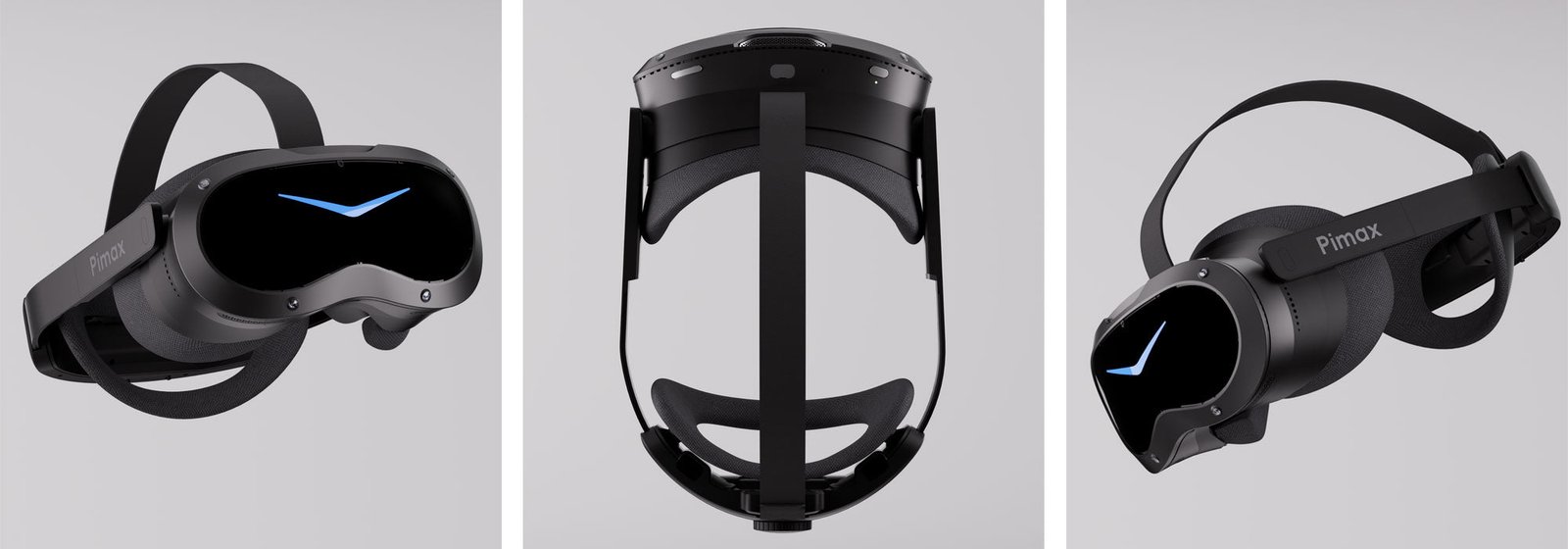
What Pimax announced
Crystal Pro has 2880 × 2880 quantum-dot LCD panels per eye, glass aspheric lenses, Mini-LED local dimming with 576 zones per eye, a stated 110° horizontal field of view and 72, 90 or 120Hz modes. Eye tracking runs at 120Hz. The standard $1,399 package includes the headset, two ringed motion controllers, a 16,000mAh external battery and a dedicated Wi-Fi adapter. An optional DisplayPort connection offers wired PC VR.
The headline feature is the optional third-generation 60G AirLink. Its two room antennas and two headset antennas form a 2×2 MIMO 60GHz link. Pimax says it can carry the GPU’s native image without video encoding in the gaze region, at up to 2880 × 2880 per eye and 90Hz. The rest of the view is transmitted more efficiently. Pimax quotes up to 6Gbps and under 2ms added link latency; that is not a claim of under 2ms total motion-to-photon latency, and independent testing is still needed. The 60GHz connection needs line of sight and does not pass through walls. Ordinary Wi-Fi streaming works without this upgrade.
Crystal Pro also offers inside-out tracking, with optional swappable faceplates for Lighthouse tracking or colour passthrough and LiDAR mixed reality. Its external battery keeps power off the headset, though Pimax has not yet given a complete headset weight or measured battery-life figure. Pimax says limited standalone use is possible through its Snapdragon XR2 Gen 1 processor, but PC VR is the main attraction. The newly announced ringless controllers are a separate product; the headset’s stated in-box controllers have tracking rings.
Pimax Crystal Pro vs Valve Steam Frame
| Feature | Pimax Crystal Pro | Valve Steam Frame |
|---|---|---|
| Display | 2880 × 2880 QLED per eye, Mini-LED local dimming | 2160 × 2160 LCD per eye |
| Lenses | Glass aspheric | Custom pancake |
| Refresh | 72 / 90 / 120Hz; optional 60G focus region up to 90Hz | 72–144Hz; 144Hz experimental |
| Wireless PC VR | Included Wi-Fi adapter; optional 60GHz AirLink for uncompressed gaze region | Included 6GHz adapter, eye-tracked foveated and Multi-Link streaming |
| Standalone | Limited Android/OpenXR mobile use on XR2 Gen 1 | SteamOS on Snapdragon 8 Gen 3, 16GB RAM, selected verified games |
| Power and weight | Included external 16,000mAh pack; full headset weight unannounced | Rear-strap 21.6Wh battery; 440g complete, 185g core module |
| Passthrough | Optional colour MR/LiDAR faceplate | Built-in monochrome; optional colour camera accessory |
| Price and timing | $1,399; $1,899 with 60G AirLink. UK price unannounced; shipping starts 2027 | £889 (256GB) or £1,089 (1TB) in UK; available through Valve’s order system |
Specifications and prices checked on 7 October 2026. Pimax figures are manufacturer claims for an unreleased headset; Valve notes that some Steam Frame specifications may change. Dollar and sterling prices are not directly comparable after taxes, exchange rates and shipping.
Which wireless approach makes more sense?
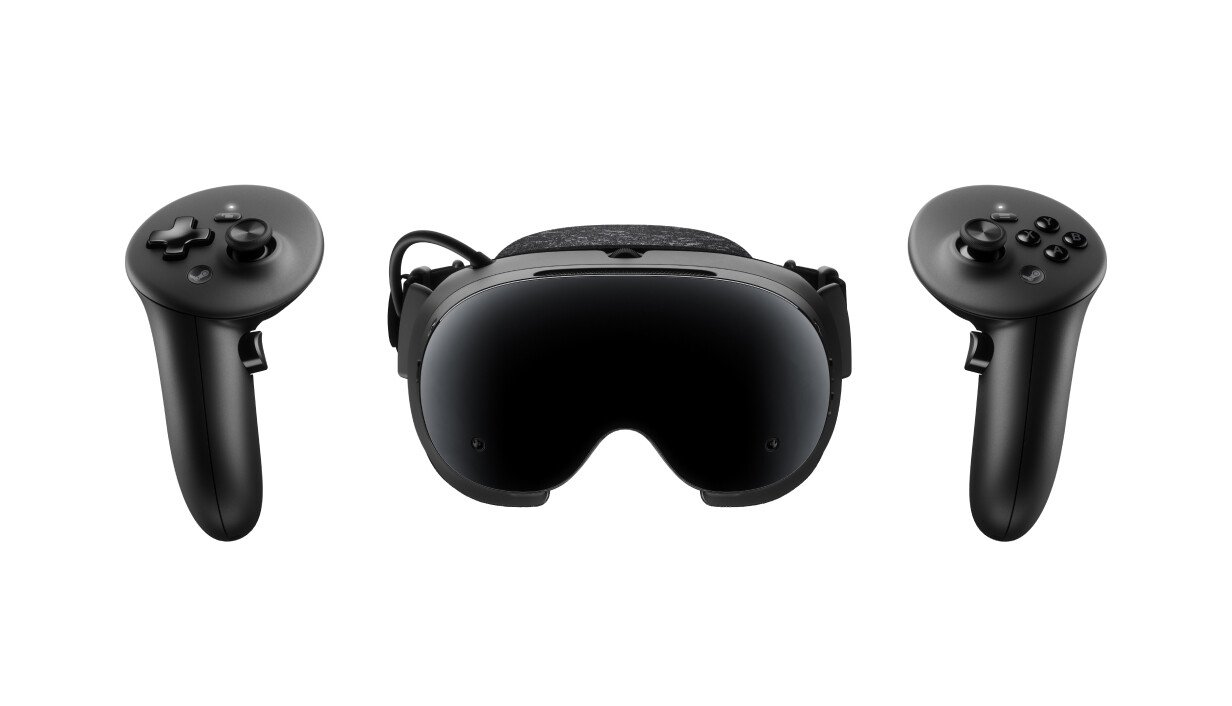
Both companies use eye tracking to spend bandwidth where your eyes are focused. Valve’s included Wi-Fi 6E adapter and Multi-Link Streaming aim to make PC streaming reliable with minimal setup. Pimax includes conventional Wi-Fi streaming as well, while its extra-cost 60G AirLink aims to avoid video compression in the gaze region. That could appeal to flight-sim and racing users studying small cockpit instruments, but the claim needs a real-world comparison of clarity, signal stability, setup and latency. The 60GHz kit also adds two room antennas and costs $500 more as a bundle than the base Crystal Pro, or $599 separately.
Raw pixel count favours Pimax on paper: roughly 8.3 million pixels per eye versus Steam Frame’s 4.7 million. That alone cannot tell you which looks sharper in use. Lens clarity across the view, rendered resolution, compression, comfort and software all matter. Pimax’s aspheric glass and Valve’s pancake optics are different approaches, and we would want time in both headsets before declaring a visual winner.
Steam Frame’s case: software and comfort
Steam Frame is built around SteamOS, PC streaming and a growing list of standalone-verified games. Its 440g quoted complete weight includes a rear-mounted battery, and the front core weighs 185g. Crystal Pro moves its battery into a separate pack, but without a full headset weight, comfort cannot be compared fairly. Valve’s controllers are designed for both VR and conventional Steam games, while Pimax’s included pair are conventional ringed VR controllers.
Neither base device is a full-colour mixed-reality headset out of the box. Steam Frame uses monochrome passthrough unless you buy a compatible colour-camera accessory; Crystal Pro requires its optional MR faceplate for colour passthrough and LiDAR. The prices of those add-ons matter if mixed reality is part of your buying plan.
Our early verdict
Choose Steam Frame now if you want a known UK price, SteamOS integration, a lighter quoted complete package and included wireless PC streaming. Watch Crystal Pro if you have a powerful PC, value high-resolution cockpit detail, and are willing to pay and configure more for the optional 60GHz link or Lighthouse support. We would wait for independent hands-on tests and a firm UK price before recommending a Crystal Pro reservation as a buying decision.
Read our fuller Steam Frame UK price and specifications guide, or check the Pimax launch announcement, Pimax FAQ and Valve’s Steam Frame page for updates. This is an independent news comparison; we have not tested Crystal Pro and neither company sponsored this article.