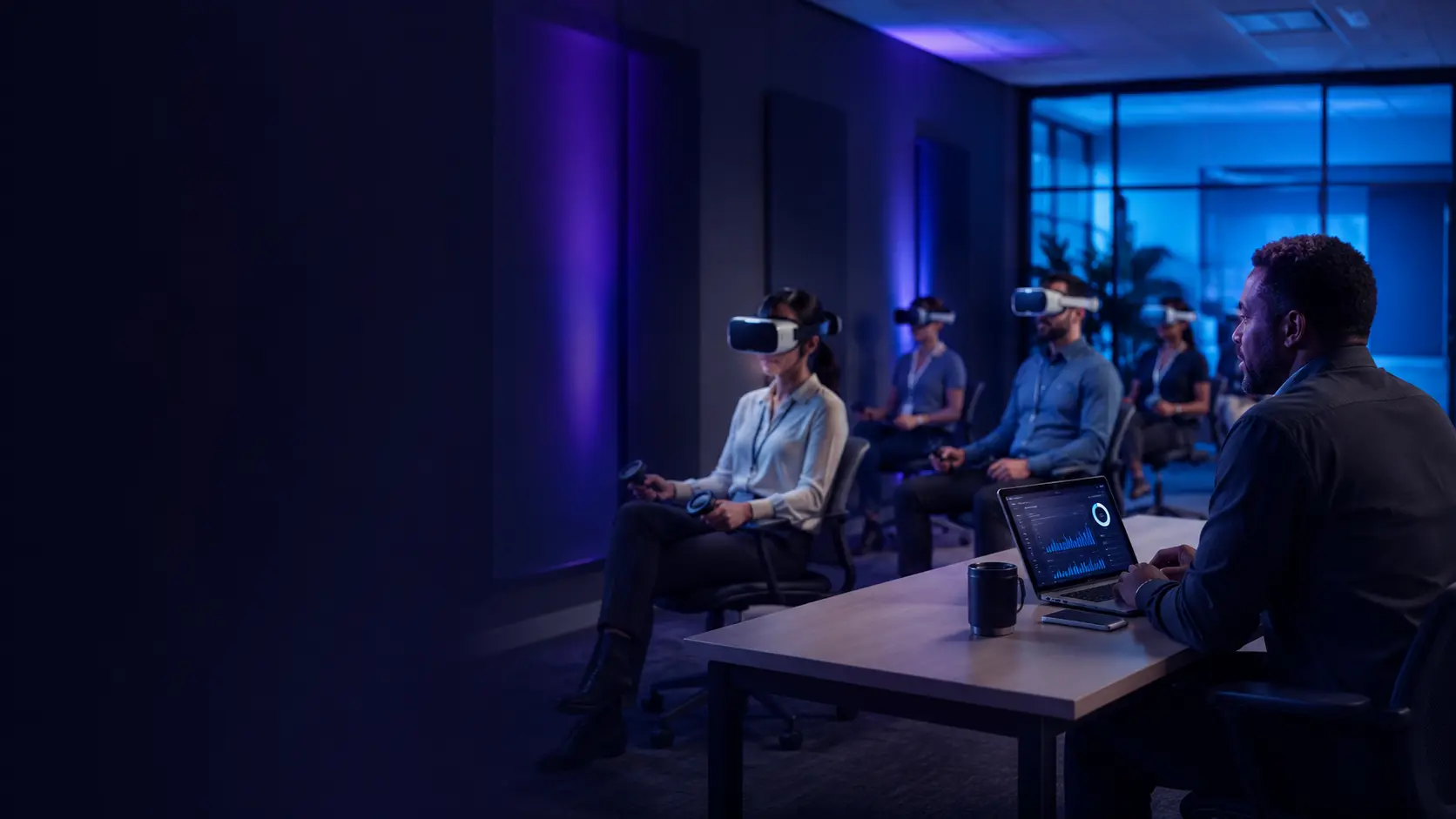
Clear, independent guidance for organisations considering virtual reality for training, design, collaboration and customer experiences.
VR can allow staff to practise difficult tasks safely, review a design before it is built, demonstrate a product remotely or experience a situation that would be expensive to reproduce physically. It can also become an expensive box of unused equipment when it is bought without a clear purpose. Our business coverage will concentrate on practical outcomes, total costs and realistic implementation.
Where VR can provide genuine value
- Training: repeatable scenarios for safety, equipment, procedures and customer service.
- Design and visualisation: review spaces, products and prototypes before committing to physical work.
- Sales and demonstrations: let customers experience products, properties or destinations remotely.
- Collaboration: shared three-dimensional reviews where ordinary video calls are insufficient.
- Recruitment and onboarding: consistent introductions to workplaces, roles and procedures.
Questions to answer before buying
| Decision | What to establish |
|---|---|
| Business objective | The measurable problem VR is expected to solve |
| Users | Who will use it, how often and under whose supervision |
| Hardware | Standalone or PC VR, comfort, durability and replacement arrangements |
| Software | Licensing, compatibility, updates and supplier support |
| Device management | Accounts, application deployment, security and shared-device operation |
| Total cost | Equipment, licences, content, staff time, training and ongoing support |
Start with a measurable pilot
A useful pilot has a defined group of users, a specific task and an agreed measure of success. That might be reduced training time, fewer errors, better knowledge retention or a more convincing customer demonstration. A successful trial can then be expanded with evidence; an unsuccessful one can be stopped before it consumes the annual budget.
Start here: our practical UK business guide
Planning a business VR project? Our new in-depth guide covers staff training, health and safety, employee privacy, managed devices, accessibility, three-year costs and a measurable small pilot.
More VR business guides coming soon
- Practical uses of VR for staff training
- How much a small-business VR system costs
- Managing a fleet of shared headsets
- Security, employee privacy and safe operation
- Choosing a VR supplier or training partner
Independent and vendor-neutral
Business platforms, subscriptions and device-management arrangements change quickly. Our guides will be dated, source-backed and updated when suppliers alter their services. We will explain both the benefits and the operational drawbacks so organisations can make decisions with their eyes open—preferably before putting the headset on.